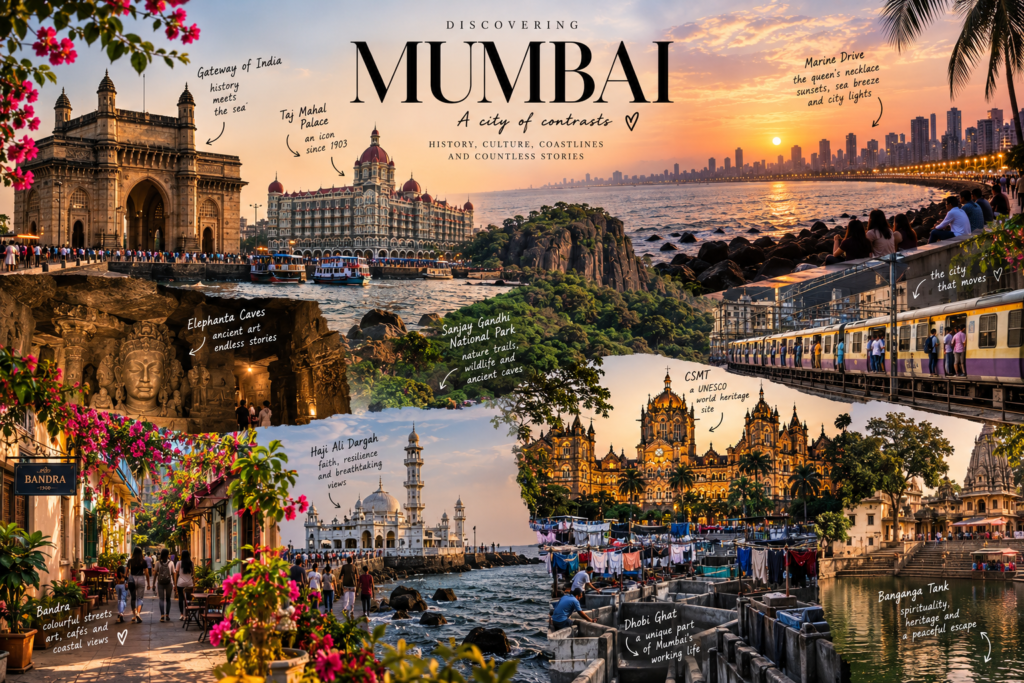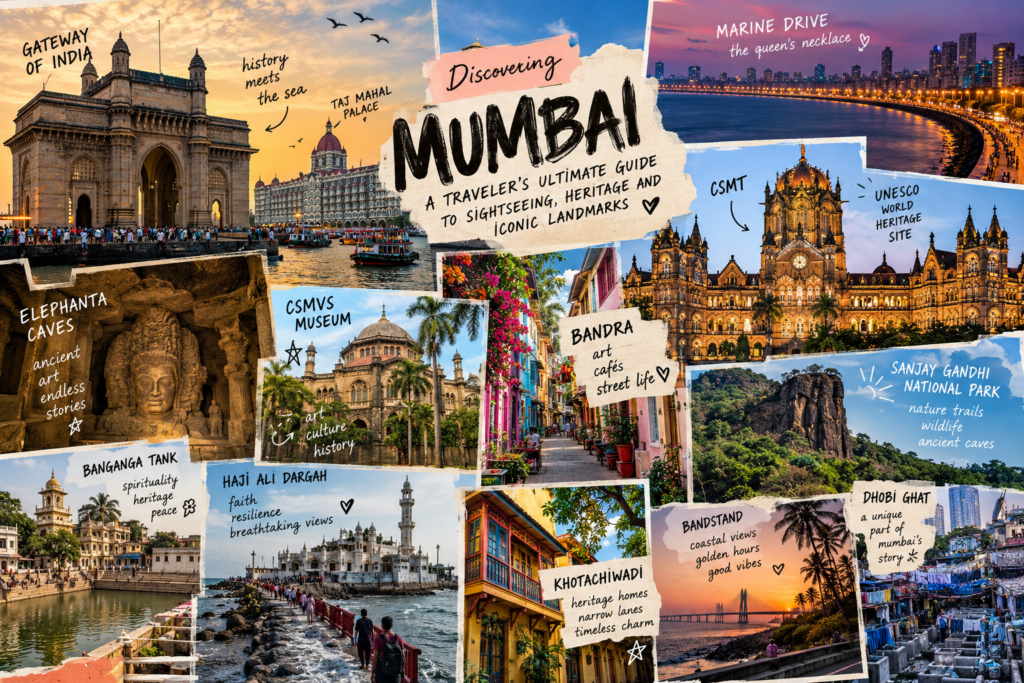
Mumbai is a city where history and culture come together, packed with incredible hidden gems Mumbai locals love to exploregrand colonial-era buildings and scenic coastal promenades to ancient caves, charming heritage neighbourhoods and revered spiritual sites, India’s financial capital offers something for every kind of traveller.
Whether you’re visiting for the first time or rediscovering the city as a local, exploring Mumbai goes far beyond its famous food scene. Its historic streets, artistic communities, architectural landmarks and green escapes reveal the many layers of a city that is constantly evolving.
This guide covers the best places to visit in Mumbai, along with practical tips to help you plan your journey.
1. Explore South Mumbai’s Iconic Landmarks
South Mumbai is the perfect starting point for understanding the city’s history and architectural character.
- Gateway of India: This iconic waterfront monument overlooks the Arabian Sea and stands beside the historic Taj Mahal Palace. It is one of Mumbai’s most recognisable landmarks and a popular starting point for sightseeing.
- Chhatrapati Shivaji Maharaj Terminus (CSMT): A UNESCO World Heritage Site, this historic railway station is celebrated for its elaborate Victorian Gothic architecture and Indian design influences.
- Marine Drive: Known as the Queen’s Necklace, this curved coastal boulevard is ideal for a leisurely walk, sunset views and evening photography.
- Fort and Colaba: Wander through heritage streets featuring historic buildings, Flora Fountain, Horniman Circle and independent art spaces. The neighbourhood offers a fascinating mix of architecture, culture and everyday city life.
Wander through heritage streets to find unexpected hidden gems Mumbai keeps tucked away.
Travel tip: Explore the Gateway of India, Colaba and Fort on the same day. Walking between nearby attractions can save both time and transport costs.
Image suggestion: Gateway of India with the Arabian Sea in the background.
2. Finding Hidden Gems Mumbai Locals Love
Beyond its famous monuments, Mumbai has historic neighbourhoods and cultural institutions that reveal its artistic and architectural past.
| Attraction | What makes it special |
|---|---|
| Chhatrapati Shivaji Maharaj Vastu Sangrahalaya (CSMVS) | A major museum featuring collections of art, sculpture, archaeology and historical artefacts. |
| Khotachiwadi | A heritage neighbourhood in Girgaon known for its traditional houses, narrow lanes and distinctive architectural character. |
| Banganga Tank | A historic water tank in Walkeshwar, surrounded by temples, stone steps and religious landmarks. |
| Elephanta Caves | A UNESCO-listed complex of rock-cut caves renowned for their monumental sculptures and religious significance. |
Elephanta Island is reached by ferry from the Gateway of India. Allow several hours for the journey and visit, and check ferry schedules and cave opening days before travelling. The caves are generally closed on Mondays.
For architecture enthusiasts and history lovers, these destinations offer a deeper understanding of Mumbai’s cultural heritage.
3. Coastal Views and Hidden Gems Mumbai Suburbs
Mumbai’s character changes as you travel beyond South Mumbai. The western suburbs offer colourful neighbourhoods, striking viewpoints and access to some of the city’s greenest spaces.
- Bandra and Ranwar Village: Discover colourful street art, historic homes, independent boutiques and narrow lanes that preserve the area’s distinctive character. Nearby Bandstand offers beautiful coastal views.Bandra is one of those classic hidden gems Mumbai visitors adore for its street art
- Malabar Hill: Explore the area’s elevated viewpoints and green surroundings. Visit designated public viewing areas for views across Back Bay and the coastline.
- Gilbert Hill: This striking geological formation in Andheri consists of a tall column of volcanic rock and offers a fascinating glimpse into the region’s natural history. Check local access arrangements before visiting.
- Sanjay Gandhi National Park and Kanheri Caves: Located in Borivali, this extensive green space combines forest landscapes, wildlife and ancient Buddhist rock-cut caves.
- Dhobi Ghat: Observe Mumbai’s historic open-air laundry district from permitted public viewpoints and learn about a distinctive part of the city’s working life.
Travel tip: Avoid combining distant suburban attractions with a packed South Mumbai itinerary. Group destinations by area to make the most of your time.
Image suggestion: The green landscape of Sanjay Gandhi National Park or the colourful lanes of Bandra.
4. Hidden Gems Mumbai: Spiritual Heritage and Temples
Mumbai’s religious landmarks reflect the city’s diverse communities and long-standing traditions.
- Haji Ali Dargah: Located on an islet off the Worli coast, this celebrated shrine is connected to the mainland by a causeway. Access depends on tide and weather conditions, so check local guidance before visiting.
- Shree Siddhivinayak Temple: Situated in Prabhadevi, this prominent temple dedicated to Lord Ganesha attracts devotees throughout the year.
- Walkeshwar Temple and Banganga Tank: Located near Malabar Hill, this historic spiritual area offers a quieter experience centred on traditional architecture, rituals and religious heritage.
When visiting places of worship, dress respectfully, follow photography restrictions and observe local customs.
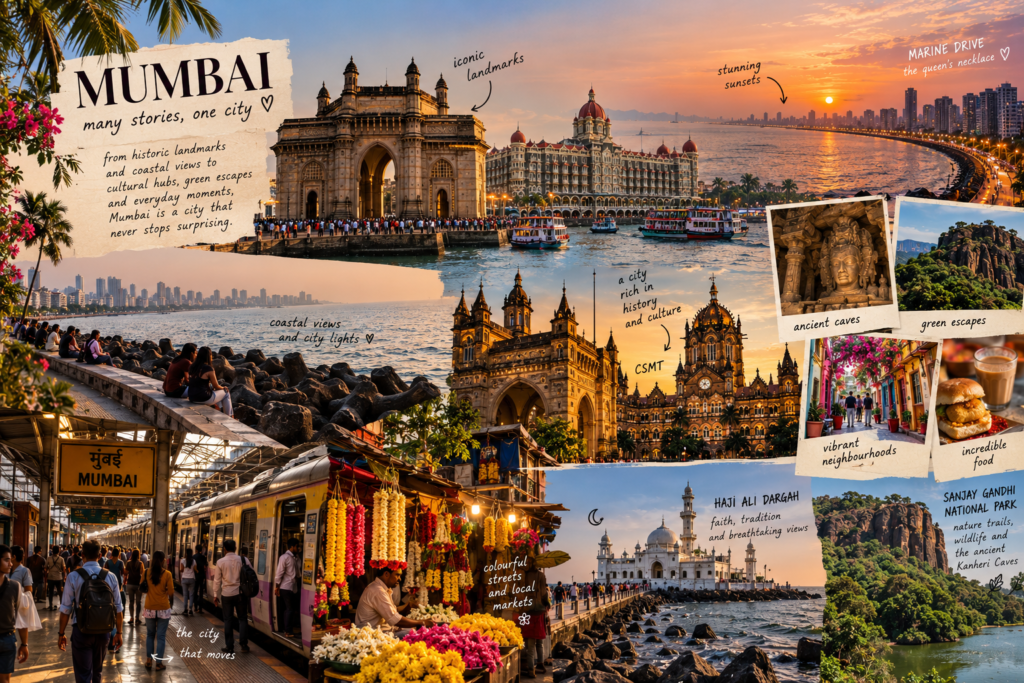
5.Hidden Gems Mumbai:Mumbai’s Everyday Energy
Some of Mumbai’s most memorable experiences come from observing how the city moves, creates and connects.
Explore local markets, browse independent art galleries, attend a theatre performance or discover live music events across the city. Neighbourhoods such as Bandra, Fort and Kala Ghoda are especially interesting for visitors who enjoy art, design and creative culture.
For a relaxed evening, walk along Marine Drive or Carter Road in well-frequented public areas. Mumbai has lively evening neighbourhoods, but no location should be assumed completely safe at every hour. Stay aware of your surroundings, check your transport options and plan your return journey.
Quick Guide to Mumbai’s Top Attractions
| Category | Destination | Best for |
|---|---|---|
| Iconic landmark | Gateway of India | Architecture and waterfront views |
| Coastal promenade | Marine Drive | Evening walks and photography |
| Heritage | Elephanta Caves | Ancient sculpture and history |
| Museums | CSMVS | Art and historical collections |
| Nature | Sanjay Gandhi National Park | Forest trails and outdoor exploration |
| Spiritual heritage | Banganga Tank | Historic temples and cultural traditions |
Frequently Asked Questions
1. What is the best time to visit Mumbai?
November to February is generally a comfortable period for sightseeing, with comparatively cooler weather. Summers can be hot and humid, while the monsoon, typically from June to September, brings heavy rainfall that may affect outdoor activities and transport.
2. How many days are enough to explore Mumbai?
Three days is a useful starting point for first-time visitors. Spend one day exploring South Mumbai’s landmarks, another discovering museums and heritage neighbourhoods, and a third exploring Bandra or Sanjay Gandhi National Park. A longer stay allows for a more relaxed pace.
3. What is the best way to travel around Mumbai?
Mumbai has suburban trains, metro services, BEST buses, taxis and app-based cabs. Auto-rickshaws primarily operate in the suburbs rather than the island city. Choose transport according to your route, travel time and comfort, and check current services before setting out.
4. Are Mumbai’s major attractions open every day?
Opening days and hours vary. Elephanta Caves are generally closed on Mondays, while museums and other attractions may have different weekly schedules or special closures. Confirm timings, ticket prices and ferry availability before visiting.
Conclusion
Mumbai is a destination best experienced through its many contrasts. Its historic landmarks reveal the city’s past, its museums and neighbourhoods celebrate creativity, and its coastal promenades and green spaces offer a welcome escape from urban life.
Whether you’re exploring ancient caves, admiring Victorian architecture or wandering through Bandra’s lively streets, every part of the city offers a different perspective.
Plan your itinerary around your interests, allow time for unexpected discoveries and experience Mumbai beyond its famous landmarks. The city’s real charm lies not only in the places you visit, but also in the stories, communities and everyday moments you encounter along the way.Uncovering these hidden gems Mumbai has to offer gives you a totally different perspective.